Bundzy
Cropp Streetwear Wordmark - Urban Fashion Embroidery Design Style
Cropp Streetwear Wordmark - Urban Fashion Embroidery Design Style
Couldn't load pickup availability
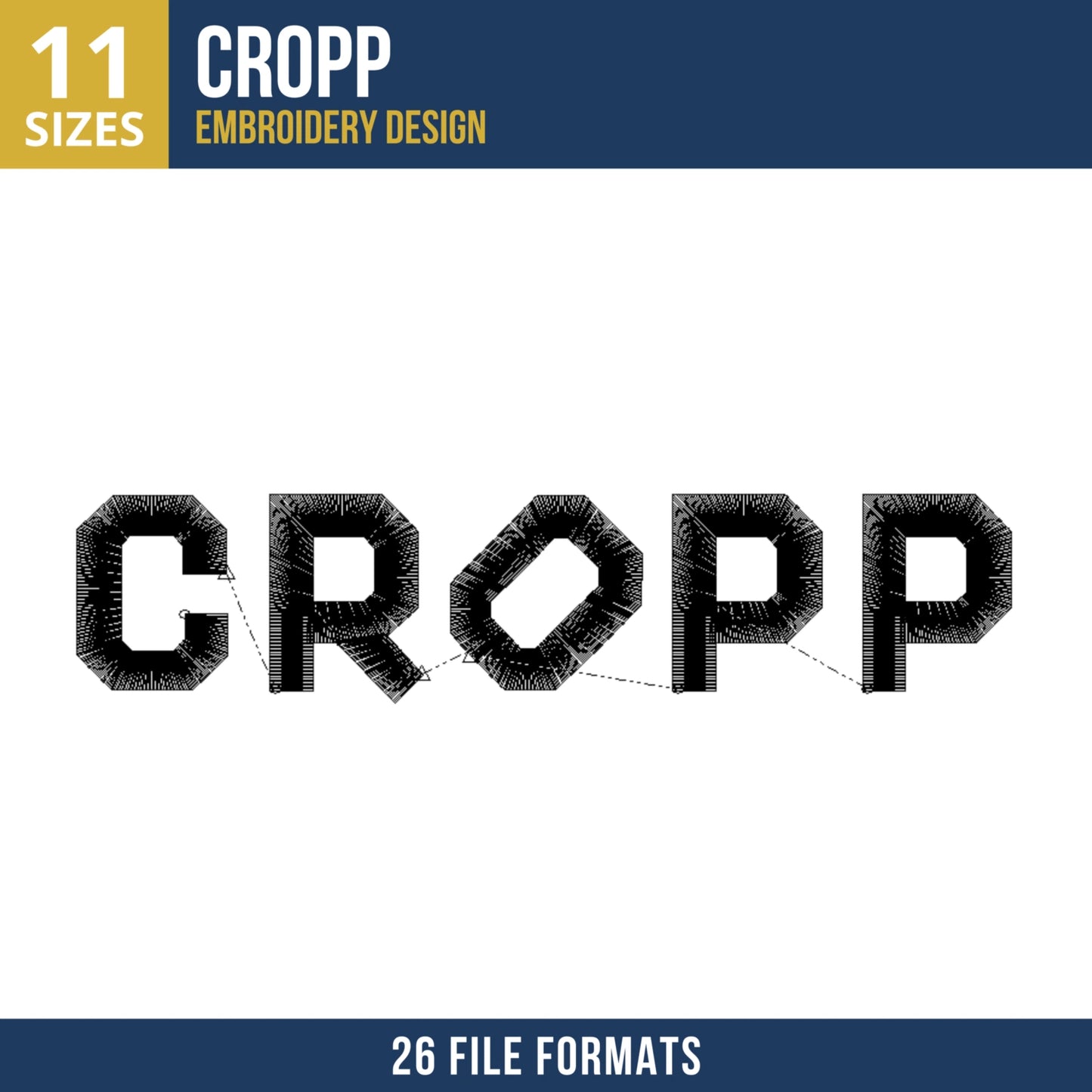
Bold geometric lettering digitized for embroidery production. The Cropp wordmark uses angular characters with open counters that create visual interest while keeping stitch counts manageable. Eleven sizes from compact 2-inch labels to statement 7-inch chest logos.
Letter construction combines thick strokes with cutout centers. This approach reduces thread consumption compared to solid-fill lettering while maintaining strong visual presence. The angular styling gives the design an industrial, contemporary feel that resonates with urban fashion markets.
Dimensional Breakdown
All measurements show width first, then height. The narrow aspect ratio makes this design efficient for horizontal placements.
- 7" across → 6.90 x 1.53 in → 3,117 stitches
- 6.5" across → 6.40 x 1.42 in → 2,898 stitches
- 6" across → 5.90 x 1.31 in → 2,673 stitches
- 5.5" across → 5.40 x 1.19 in → 2,447 stitches
- 5" across → 4.90 x 1.08 in → 2,233 stitches
- 4.5" across → 4.40 x 0.97 in → 2,007 stitches
- 4" across → 3.90 x 0.86 in → 1,791 stitches
- 3.5" across → 3.40 x 0.75 in → 1,580 stitches
- 3" across → 2.90 x 0.64 in → 1,560 stitches
- 2.5" across → 2.40 x 0.53 in → 1,315 stitches
- 2" across → 1.90 x 0.42 in → 1,048 stitches
The compact height relative to width means you can fit this design in tight vertical spaces where taller logos won't work.
Market Positioning
European streetwear brands favor this aesthetic for its sharp, modern look. Young adult fashion lines use it on cropped hoodies and high-waisted joggers. Urban boutiques apply it to canvas backpacks and crossbody bags as secondary branding.
The design reads clearly from a distance, making it effective for retail displays where customers browse from several feet away. The bold letter weight ensures visibility even on busy patterned fabrics or textured materials.
Skate shops and action sports retailers appreciate the industrial vibe. It pairs well with concrete gray, matte black, and olive drab color palettes common in that market segment.
Technical Build Quality
Open counter spaces inside letters like O and P prevent excessive stitch buildup. Traditional solid lettering would pack thousands more stitches into those areas, risking fabric distortion. This design strategically uses negative space to balance density.
Letter outlines use satin stitching with directional changes that follow each character's structure. The angular corners are programmed with tie-in stitches that prevent loose edges and thread fraying over time.
Stitch angles shift at corners to maintain coverage without overlapping excessively. This keeps the embroidery smooth rather than lumpy at transition points where direction changes occur.
Placement Ideas
Center chest on sweatshirts positions this logo at eye level for maximum impact. Left chest on shirts creates subtle branding without overwhelming the garment. Across the back shoulders on jackets makes a statement piece visible from behind.
The narrow height fits perfectly along waistbands of athletic pants and shorts. It also works horizontally down sleeves from shoulder to elbow. Some operators apply it to the front panel of dad hats where taller designs would sit too high above the brim.
Consider the lower back hem of oversized tees for a contemporary streetwear placement. The logo sits just above the natural break point where shirts fall, creating subtle branding that's visible when people move.
Fabric Pairing
Heavyweight cotton handles this design easily with standard medium tearaway backing. The moderate stitch count doesn't stress the fabric structure. Fleece and French terry show excellent results with cutaway stabilizer supporting the nap.
Technical fabrics like ripstop nylon need water-soluble topper to prevent stitches from sinking into the weave texture. The topper dissolves after embroidery, leaving clean edges. Polyester performance materials work well but require proper tension adjustment to avoid puckering.
Canvas and duck cloth are ideal substrates for this design. The sturdy weave supports embroidery without requiring heavy stabilization. Many operators use this on canvas tote bags with just a single layer of medium cutaway.
Format Selection Guide
Files come in these 26 formats: 000, 100, ART, BMP, CND, COL, CSD, DGT, DSB, DST, DSZ, EMD, EXP, HUS, INF, JEF, PCD, PCQ, PCS, PEC, PES, SEW, SHV, VIP, VP3, XXX.
Brother owners load PES or PEC files. Janome machines read JEF format natively. Bernina users select EXP or DST. Baby Lock shares Brother's PES format. Husqvarna Viking recognizes HUS, VP3, or VIP depending on model age.
When uncertain, DST serves as the universal format that almost every machine can read. It's the industry standard for commercial embroidery across multiple equipment brands.
Speed and Efficiency
The 4-inch version completes in roughly 6-7 minutes at typical machine speeds. Larger sizes add time proportionally while smaller versions finish faster. The moderate stitch count makes this design economical for quick-turn custom orders.
Single-color execution means zero thread changes during production. Load your chosen thread color once and run through entire batches without interruption. This efficiency matters when you're processing same-day orders or handling event merchandise with tight deadlines.
Licensing Boundaries
Stitch this onto products you manufacture and sell. Clothing, accessories, and promotional items are all acceptable applications. The digital embroidery files themselves must remain in your possession and cannot be distributed to other parties through any means.
File Access
Download begins immediately upon purchase completion. You receive a compressed archive containing all size variants across all supported formats. Decompress the archive, select your required format, and transfer to your embroidery equipment for immediate use.