Bundzy
GAP Wordmark | Embroidery Design Digitized File
GAP Wordmark | Embroidery Design Digitized File
Couldn't load pickup availability
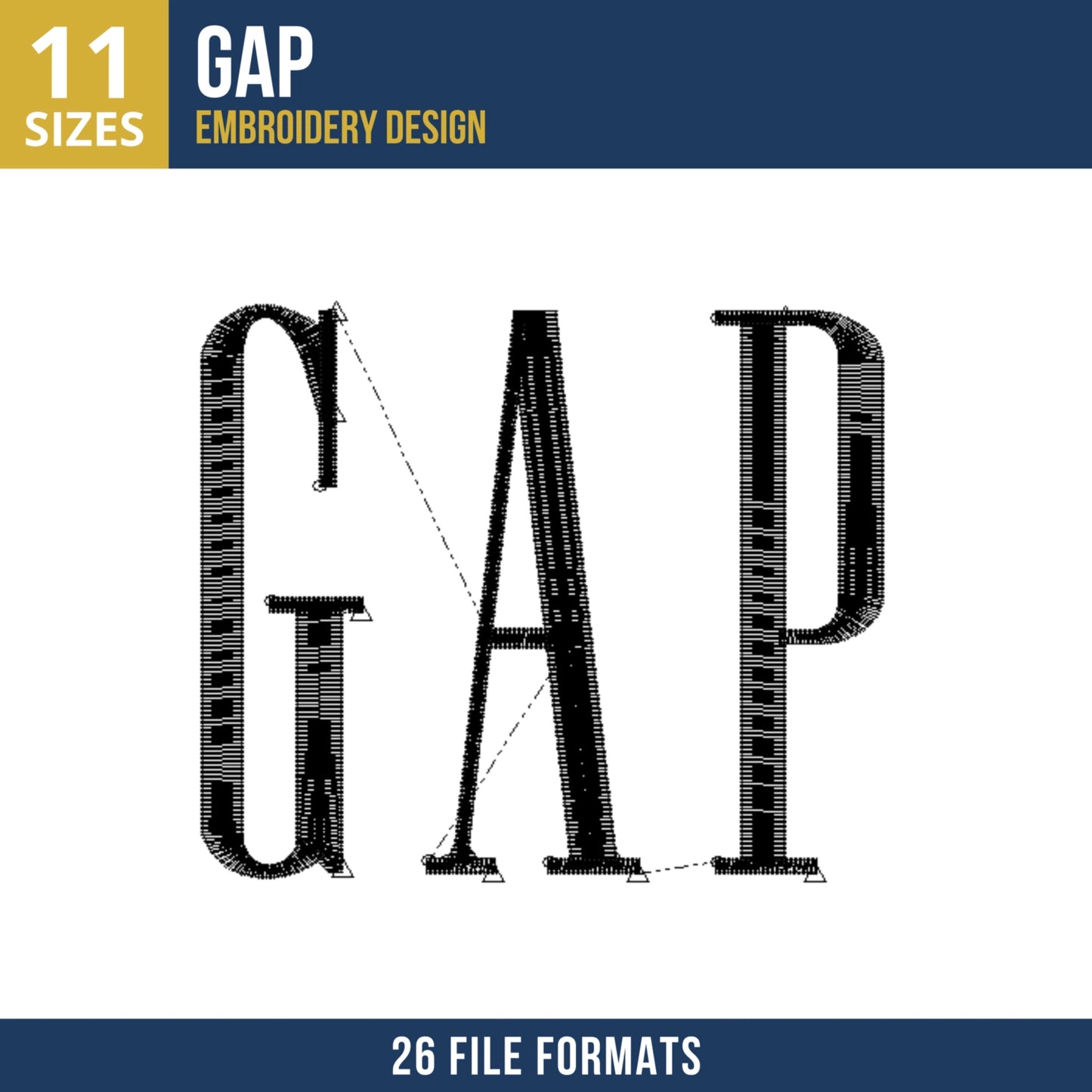
Classic American retail branding digitized for embroidery machines. The GAP logo uses serif typography with tall ascenders and traditional letterforms that defined casual fashion during the 1990s. Eleven sizes cover applications from small pocket labels to oversized back graphics.
Letter design combines thick vertical strokes with thinner horizontal elements, creating the characteristic serif profile. Outline stitching defines letter edges while fill stitching provides solid coverage within each character. The result is dimensional embroidery that reads clearly from multiple viewing angles.
Size Range Details
Height and width measurements reflect the nearly square aspect ratio. This balanced proportion makes the logo adaptable to various placement shapes.
- 7" → 6.90 x 5.76 in → 6,017 stitches
- 6.5" → 6.40 x 5.34 in → 5,594 stitches
- 6" → 5.90 x 4.93 in → 5,189 stitches
- 5.5" → 5.40 x 4.51 in → 4,880 stitches
- 5" → 4.90 x 4.09 in → 4,437 stitches
- 4.5" → 4.40 x 3.67 in → 4,008 stitches
- 4" → 3.90 x 3.25 in → 3,566 stitches
- 3.5" → 3.40 x 2.84 in → 3,128 stitches
- 3" → 2.90 x 2.42 in → 2,691 stitches
- 2.5" → 2.40 x 2.00 in → 2,492 stitches
- 2" → 1.90 x 1.58 in → 1,974 stitches
The vertical orientation suits center-chest placements and pocket applications where square formats work better than wide horizontal designs.
Nostalgia and Contemporary Use
Vintage clothing resellers embroider this on thrifted basics to increase resale value. The logo triggers 90s nostalgia among millennials who remember the brand's peak cultural presence. Retro fashion enthusiasts appreciate how it instantly dates garments to a specific era.
Mall culture revival movements use this logo ironically on custom pieces that reference suburban teenage fashion from two decades ago. The aesthetic works for both genuine appreciation of period style and knowing commentary on commercial fashion history.
Some operators target parents buying for teenagers who want "safe" branding that isn't too edgy or trend-specific. The logo communicates mainstream acceptability while still functioning as recognizable branding.
Typography Characteristics
Serif details appear most prominently in the uppercase letters where horizontal strokes cap vertical stems. The lowercase letters maintain the serif structure but use different proportions. This mixed-case approach creates visual interest compared to all-caps branding.
Letter spacing allows each character to breathe individually rather than crowding together. The generous spacing requires more horizontal room but improves readability when embroidered at smaller sizes where tight spacing might blur letter boundaries.
Thick-thin stroke contrast typical of serif fonts translates to variable stitch density across each letter. Vertical stems receive denser fill stitching while horizontal crossbars use lighter coverage, mimicking the optical weight differences in the original typography.
Practical Applications
Pocket squares on button-up shirts showcase the logo at 2.5-3 inch sizes. The square aspect ratio fits naturally into pocket dimensions without awkward cropping. Viewers see the complete logo framed cleanly within the pocket boundaries.
Hoodie center-chest placements work well at 5-6 inches where the logo becomes a focal point without overwhelming the garment. The vertical dimension doesn't extend too high toward the neck or too low toward the waist, staying centered in the comfortable branding zone.
Back applications on jackets and sweatshirts use the 7-inch maximum size for statement impact. The logo reads clearly from behind at distances typical in retail and social environments where branding recognition matters.
Fabric and Backing Guidelines
Standard cotton fleece handles this design easily with medium-weight cutaway backing. The moderate stitch density doesn't overwork the fabric structure. Most operators report minimal puckering when proper hooping tension is maintained.
Vintage-washed garments need extra stabilizer because pre-washing softens fabric making it less stable during embroidery. Use heavyweight cutaway or double-layer medium weight to compensate for reduced fabric integrity.
Performance fabrics like moisture-wicking polyester blends require special attention to stitch tension. The smooth surface and stretch properties fight against embroidery pull. Reduce top tension slightly and use stretch-specific cutaway backing designed for athletic materials.
Format Availability
Complete library includes: 000, 100, ART, BMP, CND, COL, CSD, DGT, DSB, DST, DSZ, EMD, EXP, HUS, INF, JEF, PCD, PCQ, PCS, PEC, PES, SEW, SHV, VIP, VP3, XXX.
Most embroiderers use DST for commercial multi-needle equipment or PES for Brother home machines. Format selection rarely affects final embroidery quality since all formats contain identical stitch data, just encoded differently for various machine brands.
Thread Color Strategies
Navy blue represents the brand's most iconic colorway. Pair it with white or cream garments for maximum authenticity to original branding. Black offers contemporary versatility that works across broader color palettes than navy's specific associations.
Some operators experiment with burgundy or forest green on neutral backgrounds, creating vintage prep school aesthetics that reference the brand's early positioning. These alternative colors test well with customers seeking differentiation from standard navy presentation.
Monochromatic applications where thread matches fabric color create subtle texture-based branding. The embroidery shows through dimensional relief rather than color contrast. This technique appeals to minimalist fashion markets.
Production Time Expectations
The 4-inch version runs roughly 10-12 minutes on single-needle equipment at standard speeds. Serif details and fill density create longer run times than simple sans-serif text of similar dimensions. Multi-needle machines cut time significantly with faster maximum speeds.
Thread consumption averages 20-30 yards per logo depending on size selection. Stock adequate inventory for batch production to avoid mid-run shortages that interrupt workflow.
Usage Authorization
Create physical merchandise using this embroidery design. Finished garments and accessories may be sold through commercial channels. Digital files must stay within your operation and cannot be transferred to other parties under any circumstances.
File Distribution
Instant download delivers compressed archive containing all size variants across all formats. Extract files to local storage, select appropriate format for your equipment, and transfer via standard methods. Files work immediately without requiring software conversion.