Bundzy
Guess LA Wordmark Embroidery Design - Instant Download 11 Sizes
Guess LA Wordmark Embroidery Design - Instant Download 11 Sizes
Couldn't load pickup availability
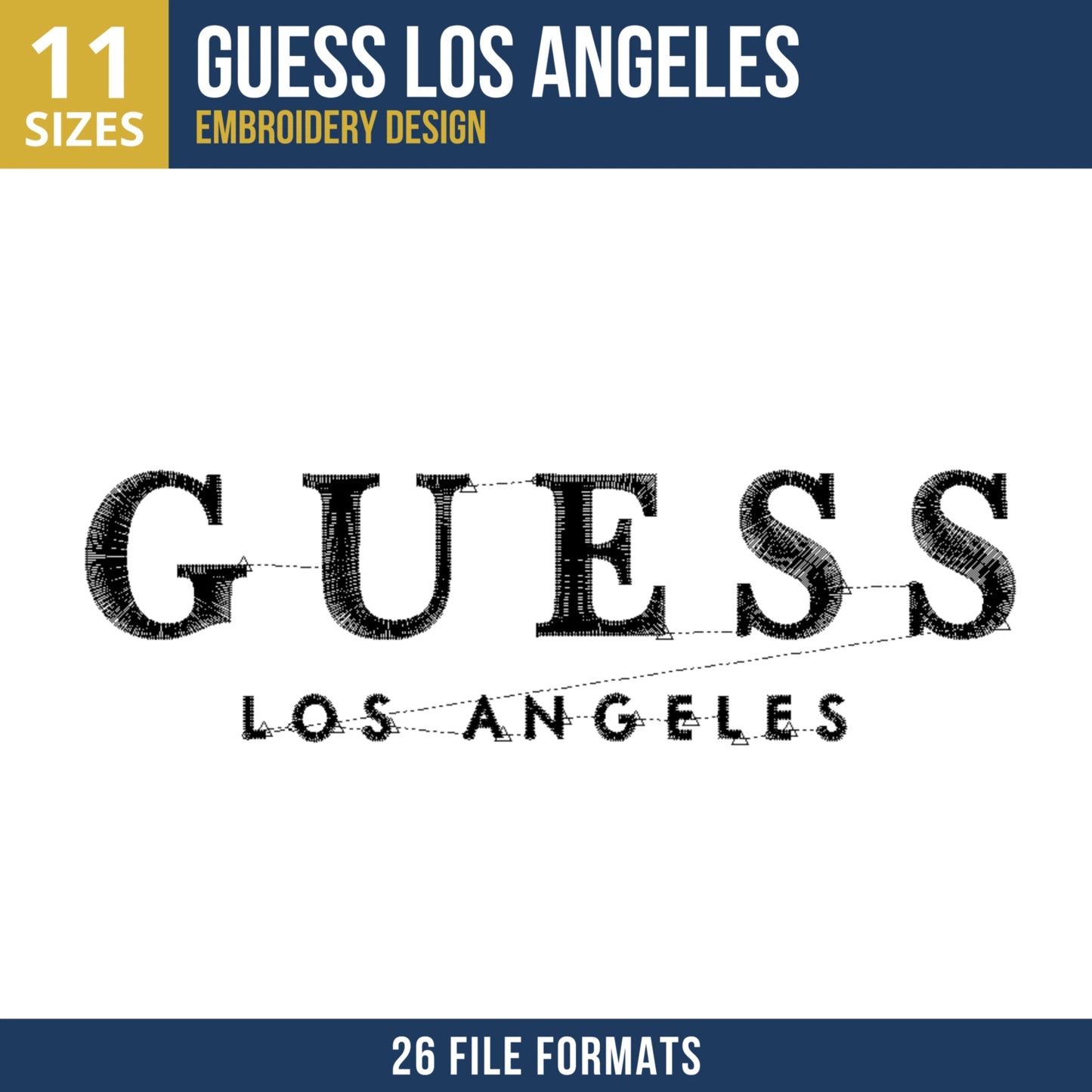
Two-line embroidery design featuring the Guess brand name above Los Angeles location text. Large serif lettering dominates the top line while smaller sans-serif capitals complete the bottom. Eleven digitized sizes accommodate diverse placement needs from pocket details to full-back graphics.
The design uses contrasting typography between lines to create visual hierarchy. Bold serif capitals command attention for the brand name while cleaner sans-serif supports the geographic identifier without competing for prominence.
Size and Stitch Information
Width drives the primary measurement with height scaling proportionally. The two-line stacked format creates a compact vertical footprint relative to total width.
- 7" wide → 6.90 x 1.98 in → 4,013 stitches
- 6.5" wide → 6.40 x 1.84 in → 3,742 stitches
- 6" wide → 5.90 x 1.69 in → 3,450 stitches
- 5.5" wide → 5.40 x 1.55 in → 3,195 stitches
- 5" wide → 4.90 x 1.41 in → 2,926 stitches
- 4.5" wide → 4.40 x 1.26 in → 2,640 stitches
- 4" wide → 3.90 x 1.12 in → 2,379 stitches
- 3.5" wide → 3.40 x 0.98 in → 2,274 stitches
- 3" wide → 2.90 x 0.83 in → 1,988 stitches
- 2.5" wide → 2.40 x 0.69 in → 1,666 stitches
- 2" wide → 1.90 x 0.54 in → 1,374 stitches
Moderate stitch counts indicate efficient digitizing without unnecessary density. The 4-inch version runs approximately 7-8 minutes on standard equipment.
Denim and Casualwear Origins
This branding emerged during denim's designer transformation in the 1980s when premium jeans became status symbols. The Los Angeles association positioned the brand within California lifestyle marketing that emphasized casual luxury rather than formal fashion.
Contemporary users targeting vintage denim markets appreciate the geographic specificity. Placing "Los Angeles" under the brand name evokes West Coast culture even when applied to non-denim garments. The strategy works particularly well for retailers emphasizing California aesthetics.
Fashion history enthusiasts recognize this branding style as characteristic of premium casualwear positioning from that era. The two-line format allowed brands to claim both name recognition and cultural geography simultaneously.
Typography Analysis
Serif letterforms in the brand name include decorative terminals and brackets typical of traditional typography. These details add visual weight and establishment credibility. The serif choice signals longevity and heritage rather than trend-driven modernism.
San-serif lettering for "Los Angeles" creates intentional contrast. The cleaner forms prevent the bottom line from overwhelming the composition while maintaining readability at smaller sizes where serif details might blur together.
Letter spacing in both lines balances individual character recognition with unified word formation. The spacing feels generous compared to tight modern branding, reflecting design preferences from the brand's formative decades.
Application Scenarios
Denim jacket backs showcase this logo at 6-7 inch sizes where it becomes the garment's defining feature. The horizontal format naturally spans shoulder width without extending uncomfortably low toward the waist. This placement references classic casual jacket branding from the logo's original era.
Sweatshirt chest applications work at 4-5 inches where the logo sits comfortably in the upper torso zone. The two-line structure doesn't require excessive vertical space that would push too close to the neckline or extend awkwardly low.
Tote bag sides benefit from the horizontal orientation at 5-6 inches. The logo reads clearly when bags hang from shoulders or sit on surfaces. The compact height prevents the design from getting lost in bag material folds and creases.
Fabric Selection Guidance
Denim weight varies considerably affecting embroidery approach. Lightweight denim under 10 ounces needs medium cutaway backing. Heavyweight denim over 14 ounces requires minimal stabilization since the fabric itself provides structure. Mid-weight denim around 12 ounces works with either tearaway or cutaway depending on desired permanence.
French terry and fleece show excellent results with this design. The moderate stitch density doesn't overwhelm knit structure while still providing adequate coverage. Use cutaway backing cut slightly larger than the design perimeter to prevent edges from pulling away from stabilizer during washing.
Canvas for bags and accessories handles the embroidery easily. The tight weave supports stitching without requiring heavy stabilization. Medium tearaway suffices for most canvas applications unless the fabric is particularly thin or loose-woven.
File Format Selection
Your download includes these 26 formats: 000, 100, ART, BMP, CND, COL, CSD, DGT, DSB, DST, DSZ, EMD, EXP, HUS, INF, JEF, PCD, PCQ, PCS, PEC, PES, SEW, SHV, VIP, VP3, XXX.
Commercial operations standardize on DST across different machine brands to simplify workflow. Home embroiderers match format to their specific equipment manufacturer. When uncertain, consult machine documentation or test with DST as the most universally compatible option.
Thread Color Recommendations
Traditional execution uses single-color embroidery where both lines stitch in the same thread. Black on light denim creates authentic vintage aesthetics. Navy on white or cream produces cleaner contemporary looks. Burgundy or forest green offer sophisticated alternatives that maintain formality.
Two-color separation allows brand name and location text in different threads. Black for "Guess" with red for "Los Angeles" creates visual separation between hierarchy levels. This approach requires programming color stops if your machine doesn't handle automatic changes.
Tonal embroidery matching thread to fabric color produces subtle texture-based branding. The logo shows through dimensional relief rather than color contrast. This technique appeals to markets preferring understated branding over loud logos.
Commercial Rights
Embroider this design onto products you manufacture and sell commercially. Apparel, bags, accessories, and textile goods constitute permitted applications. Digital embroidery files must remain exclusively within your operation and cannot be distributed through any means.
Download Access
Compressed archive download begins immediately upon purchase. Extract files to access all size variants across all supported formats. Transfer appropriate format to embroidery equipment using standard file transfer methods. Files work immediately without requiring conversion software.