Bundzy
Levi's Batwing Embroidery Design - Red Tab for Denim Jacket
Levi's Batwing Embroidery Design - Red Tab for Denim Jacket
Couldn't load pickup availability
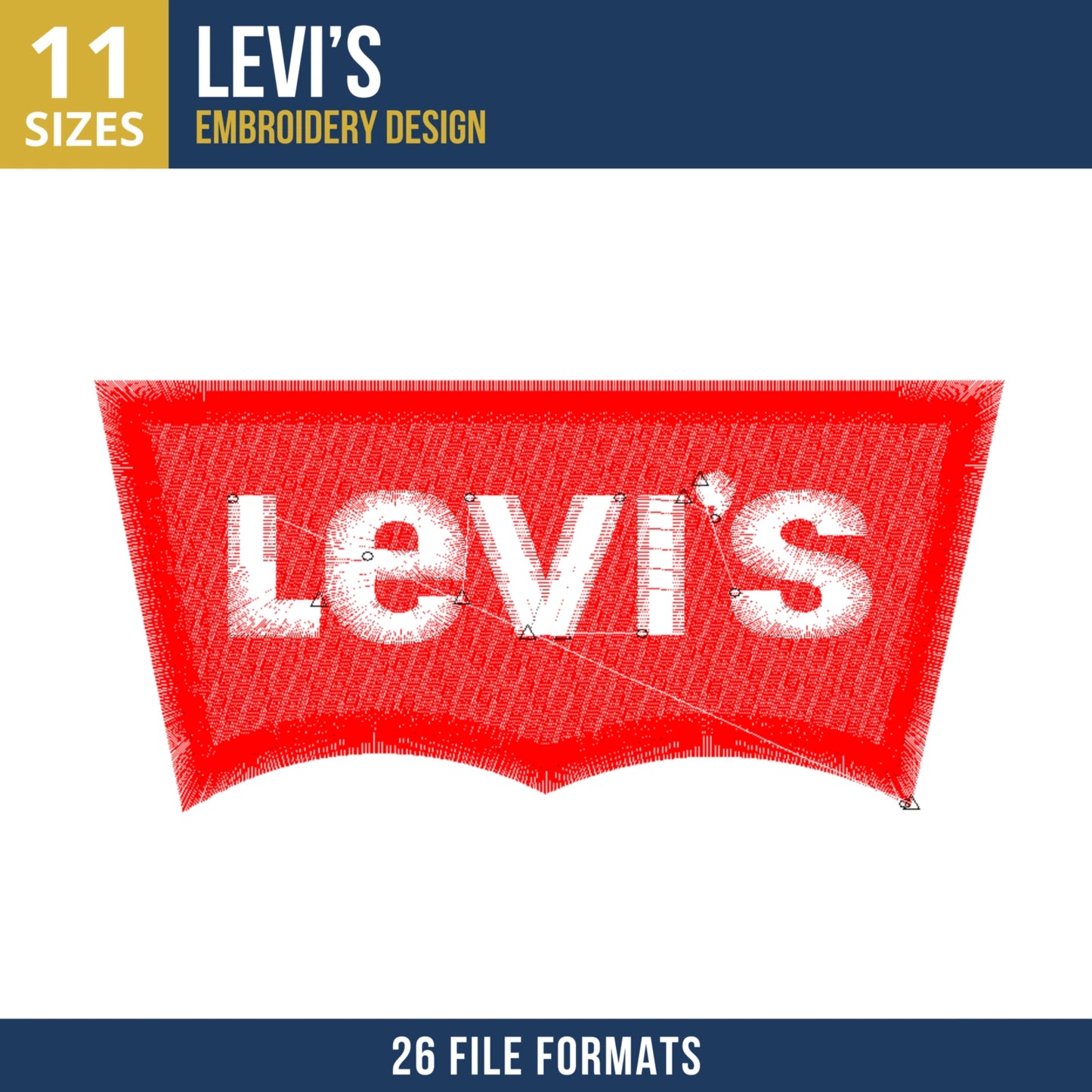
The iconic red tab badge that defined denim heritage for generations. This embroidery recreates the distinctive batwing shape with white lettering on red background, capturing one of the most recognizable symbols in American workwear history. Eleven sizes handle applications from small pocket tabs to oversized statement patches.
The design combines filled background stitching with white letter overlay, creating the dimensional layering that makes the original tab stand out on denim pockets. Curved batwing edges require careful digitizing to maintain smooth outlines without jagged transitions.
Stitch Count Analysis
Higher stitch counts reflect the filled red background area. Unlike simple text designs, this logo requires complete coverage behind the lettering to replicate the tab appearance.
- 7" → 6.90 x 3.25 in → 17,829 stitches
- 6.5" → 6.40 x 3.02 in → 15,680 stitches
- 6" → 5.90 x 2.78 in → 13,712 stitches
- 5.5" → 5.40 x 2.54 in → 11,833 stitches
- 5" → 4.90 x 2.31 in → 10,111 stitches
- 4.5" → 4.40 x 2.07 in → 8,543 stitches
- 4" → 3.90 x 1.84 in → 7,055 stitches
- 3.5" → 3.40 x 1.60 in → 5,729 stitches
- 3" → 2.90 x 1.36 in → 4,783 stitches
- 2.5" → 2.40 x 1.13 in → 3,649 stitches
- 2" → 1.90 x 0.89 in → 2,670 stitches
The 4-inch version typically runs 20-25 minutes depending on machine speed. Budget extra time compared to outline-only logos because of the background fill requirement.
Workwear Heritage Context
This tab originated as functional labeling on back pockets before becoming a status marker. The red color distinguished authentic products from competitors during the brand's expansion years. Modern applications tap into this heritage positioning even when applied to non-denim garments.
Vintage workwear collectors specifically seek this symbol for restoration projects on classic jackets and overalls. The batwing shape became so culturally embedded that it functions as instant brand recognition without requiring accompanying text.
Contemporary streetwear brands reference this design vocabulary when establishing credibility through historical associations. Applying it to modern apparel creates dialogue between utilitarian origins and fashion-forward applications.
Color Layer Structure
The design requires two-color execution for authentic replication. Red stitches the background shape first, establishing the tab foundation. White lettering stitches second, overlaying the red base. This sequence prevents red stitches from showing through white areas.
Some operators experiment with color inversions where white background supports red lettering. This approach creates visual interest while maintaining recognizable design language. The inverse colorway tests particularly well on dark garments where red-on-white might lack contrast.
Tonal variations using burgundy or rust instead of pure red offer vintage aesthetics that reference faded original tabs. These alternative reds appeal to customers seeking authentic aged appearance rather than crisp new branding.
Technical Digitizing Challenges
Batwing curves demand precise control points in digitizing software. Too few control points create angular jumps. Too many points overcomplicate the file causing machine hesitation. The balance requires experience translating smooth curves into stitch-executable geometry.
Background fill uses angle changes to create subtle texture mimicking fabric tab construction. Uniform fill angle would appear flat. Strategic angle shifts add dimension that reads as material depth rather than simple embroidery.
Letter edges where white meets red background need careful underlay programming. The underlay prevents color mixing where white thread sits directly against red stitches. Without proper underlay, colors can appear muddy rather than crisp at the color boundary.
Strategic Placement Applications
Traditional back pocket positioning at 2-3 inches replicates original tab placement. This application satisfies purists seeking authentic denim customization. The familiar location triggers recognition even from peripheral vision.
Jacket sleeves near shoulder seams showcase the logo at 4-5 inches where it becomes visible branding without overwhelming the garment. The curved batwing shape complements natural shoulder contours better than rectangular logos.
Oversized chest applications at 6-7 inches transform the logo into graphic focal points. This exaggerated scaling works for streetwear aesthetics where logos become design elements rather than subtle branding.
Denim-Specific Considerations
Raw denim's stiffness requires adjusted tension settings to prevent needle deflection. The tight weave resists penetration causing needles to bend rather than pierce cleanly. Slightly loosening top tension compensates for this resistance.
Stretch denim containing elastane needs cutaway stabilizer cut generously beyond design perimeter. The stretch fights against embroidery pull creating registration issues if backing releases from fabric edges. Extra stabilizer margin prevents this problem.
Pre-washed denim's softened structure embroideries more easily than raw denim but requires heavier backing to compensate for reduced fabric integrity. What feels softer to touch actually needs more support during stitching to prevent distortion.
Available File Formats
Complete format collection: 000, 100, ART, BMP, CND, COL, CSD, DGT, DSB, DST, DSZ, EMD, EXP, HUS, INF, JEF, PCD, PCQ, PCS, PEC, PES, SEW, SHV, VIP, VP3, XXX.
Multi-color designs like this benefit from formats that preserve color information natively. PES and JEF formats handle color data well. DST format works universally but may require manual color assignment in some software.
Thread Selection Strategy
Authentic red matches the classic tab color familiar from vintage denim. Color codes vary by thread manufacturer but references include Madeira 1147 or Robison-Anton 2378. White uses standard bright white rather than cream for maximum contrast.
Thread weight affects final appearance significantly. 40-weight creates standard definition suitable for most applications. 60-weight produces finer detail but requires slower speeds and careful tension. 30-weight gives bold presence but may overwhelm smaller sizes.
Polyester thread withstands repeated washing better than rayon in denim applications where laundering frequency is high. Rayon adds sheen appropriate for fashion applications but fades faster under harsh detergents common in denim care.
Production Time Economics
The filled background substantially increases production time compared to outline designs. A 4-inch version takes roughly 3-4 times longer than equivalent text-only branding. Price accordingly to reflect material cost and machine time investment.
Thread consumption for the 5-inch version approximates 50-60 yards total across both colors. The red background consumes majority of thread due to fill coverage. Budget thread inventory appropriately for batch production.
Commercial Authorization
Create physical products using this embroidery design. The digital files remain your exclusive property and cannot be distributed to third parties through any channel including cloud storage, email, or file-sharing platforms.
Download Package
Compressed file containing all eleven sizes in all 26 formats. Extract the archive and transfer appropriate files to embroidery equipment. The design loads immediately into machines supporting the selected format.