Bundzy
Tribal Gecko Embroidery Design
Tribal Gecko Embroidery Design
Couldn't load pickup availability
Tribal Gecko Embroidery Design: Bold Polynesian-Style Machine Embroidery File
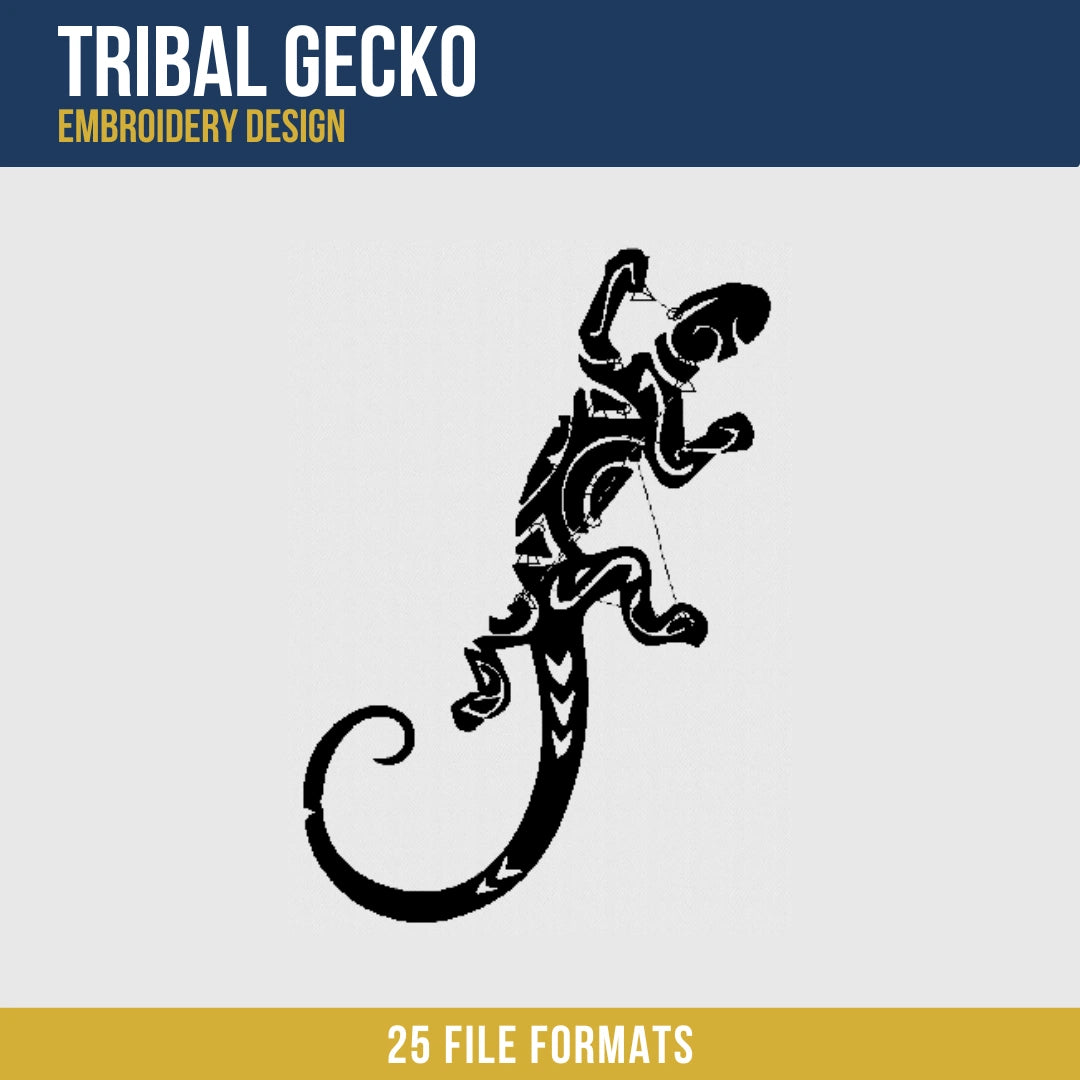
This Tribal Gecko embroidery design is a bold, graphic machine embroidery file built entirely in a single-color Polynesian-inspired tribal style, rendered in high-contrast black thread on a neutral ground. The gecko body is constructed from interlocking filled satin sections, arc fills, and geometric negative space cutouts that form the visual patterning throughout the torso, limbs, and tail. The design captures a climbing pose with the tail curling dramatically at the base, giving the composition strong diagonal movement and visual tension. Total stitch count is 33,313 stitches.
What sets this design apart from other animal silhouette embroidery files is the integration of true tribal patterning directly into the body structure rather than overlaid as a secondary layer. The gecko's form and the pattern are one and the same, meaning the internal geometric elements, chevrons, spirals, and arc segments, serve simultaneously as anatomical detail and decorative motif. This demands a digitizing approach where every segment transition doubles as both a shape boundary and a pattern junction, a level of structural integration rarely achieved in single-color wildlife embroidery.
Design Details
The gecko body is the dominant element, rendered as a climbing silhouette in solid black thread with the head oriented upward-right and the tail curling to the lower-left. The head features a rounded snout filled with compact satin stitches and a spiral eye motif formed from a tight circular arc fill that creates depth within a flat design. The neck and upper torso carry a large angular cutout section with triangular negative space windows that define the tribal body patterning. The mid-body is subdivided into discrete filled panels: a broad arc section across the upper chest, a central triangular wedge, and flanking geometric side panels. Each forelimb is rendered as a segmented satin block with visible joint definition. The hindlimbs repeat the segmented satin approach with an additional chevron row along the inner thigh. The belly centerline carries a column of descending chevron shapes pointing toward the tail base. The tail itself begins as a broad satin-filled taper and narrows progressively into a fine curling tip, with a secondary chevron row running along the underside through the mid-section. All internal pattern breaks are achieved through void space rather than color change, giving the entire design its bold, tattoo-like graphic quality.
Size Guide
| Size | Dimensions | Stitch Count |
|---|---|---|
| Standard | 10.77 x 15.51 in | 33,313 |
Formats Included
This design is delivered in 25 file formats compatible with all major machine brands: PES, PEC (Brother, Baby Lock, Bernina) | DST, DSB (Tajima) | JEF, SEW (Janome, Elna) | VP3, VIP, SHV, HUS (Husqvarna Viking) | PCS, PCQ, PCD (Pfaff) | XXX (Singer) | ART (Bernina software) | 000 (Singer/generic) | 100 (Toyota) | CND (Melco/Conde) | CSD (Singer/POEM) | DGT (Barudan) | DSZ (Tajima older) | EMD (Elna) | EXP (Melco/Bernina) | INF (design info)
Digitizing Quality
The most demanding aspect of digitizing this design is managing the negative space windows that define the tribal pattern. Each void cutout is surrounded on all sides by filled satin sections, which means every adjacent panel must be sequenced to avoid jump stitches crossing open areas. The digitizer has sequenced all fills so the machine travels within filled regions rather than over voids, keeping the final embroidery clean even at the large 10.77 x 15.51 inch scale.
The curling tail presented a secondary challenge specific to this design. As the tail narrows from a wide satin block down to a fine tapered tip, column width drops progressively across dozens of individual stitch columns. Density compensation was applied along the taper to prevent fabric distortion and puckering, which is a common failure point when satin-filled tails narrow below a quarter inch in width. The result is a smooth, consistent taper with no thread pooling at the tip.
The chevron rows running along the belly and tail underside required precise underlay staging to keep the sharp points of each chevron crisp without the directional satin stitches pulling the points into rounded ends. A split underlay approach was used beneath each chevron element, locking the fabric in place before the top stitching locks in the geometric point geometry.
License
This design is licensed for commercial use on finished physical goods. You may sell embroidered items made with this file without per-item royalty. Digital files, including all included formats, may not be resold, redistributed, or shared in any form, whether modified or unmodified.
Instant Download
Your files are available immediately after purchase. This listing includes 1 size in 25 file formats, covering every major home and commercial embroidery machine brand. No software is required beyond your machine's standard embroidery reader. Download, unzip, and stitch.